Small business owners often ask me the same question:
"How can we attract and retain great employees when we can't afford the same benefits as larger employers?"
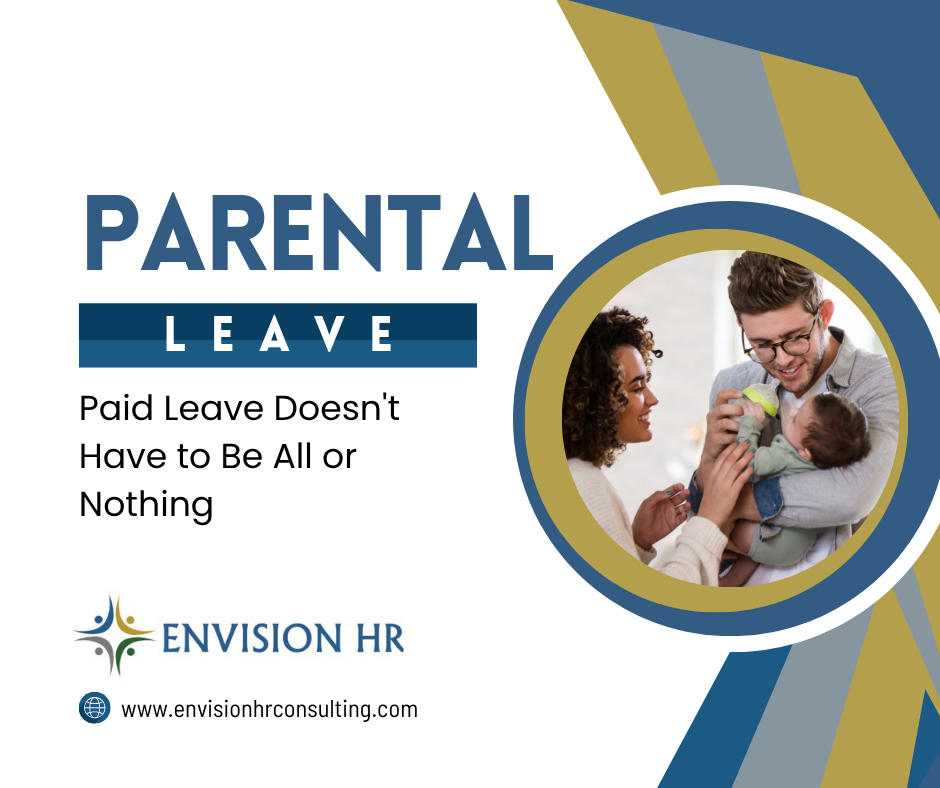
Paid parental leave is one of the most common concerns with working families.
According to Mercer, paid parental leave has evolved from a niche benefit to a mainstream offering, with employer adoption increasing from approximately 25% in 2015 to nearly 75% in 2024. At the same time, only 14 states currently have paid family and medical leave programs, leaving many employees without state-sponsored wage replacement during family or medical leave.
For small businesses, the challenge is real. Limited budgets, lean staffing, and operational demands make benefit decisions difficult. However, that doesn't mean your organization can't remain competitive.
Start with Strategy, Not Assumptions
Before eliminating or reducing a benefit because of cost, ask a different question:
What value does this benefit provide our organization?
The answer should be supported by data, not assumptions.
Consider measuring:
- Employee retention after parental leave
- Recruitment success and offer acceptance rates
- Employee engagement
- Return-to-work rates
- Turnover costs
- Time-to-fill critical positions
When organizations understand the return on their investment, benefit decisions become much more strategic.
Paid Leave Doesn't Have to Be All or Nothing
Many small businesses assume their only choices are to offer a generous paid leave program or nothing at all.
In reality, there are many options that can better fit a limited budget, including:
- Paid leave combined with accrued Paid Time Off (PTO)
- Short-term disability benefits
- Phased return-to-work schedules
- Flexible or hybrid work arrangements
- Remote work options where feasible
- Leave donation or PTO-sharing programs
- Supplemental paid leave for primary caregivers
- Gradual implementation as the organization grows
The goal is to create a benefit package that supports employees while remaining financially sustainable.
Remember the Total Rewards Picture
Employees evaluate more than salary.
A competitive employment experience may include:
- Flexible scheduling
- Meaningful Paid Time Off
- Affordable health insurance
- Retirement benefits
- Professional development
- Career advancement opportunities
- Positive workplace culture
- Supportive leadership
For many employees, these factors influence employment decisions just as much as paid leave.
Strategic HR Is About Smart Investments
As an HR consultant, I encourage clients to avoid asking:
"Can we afford this benefit?"
Instead, ask:
"How can we design benefits that attract and retain talent while supporting our business strategy?"
The best employee benefit programs are not necessarily the most expensive, they are the ones that align with an organization's goals, workforce, and budget.
Every organization is different. The right solution balances compassion for employees with long-term business sustainability.
If your organization is reviewing its leave policies, compensation strategy, or total rewards program, Envision HR can help you evaluate your options and design solutions that support both your employees and your business.